
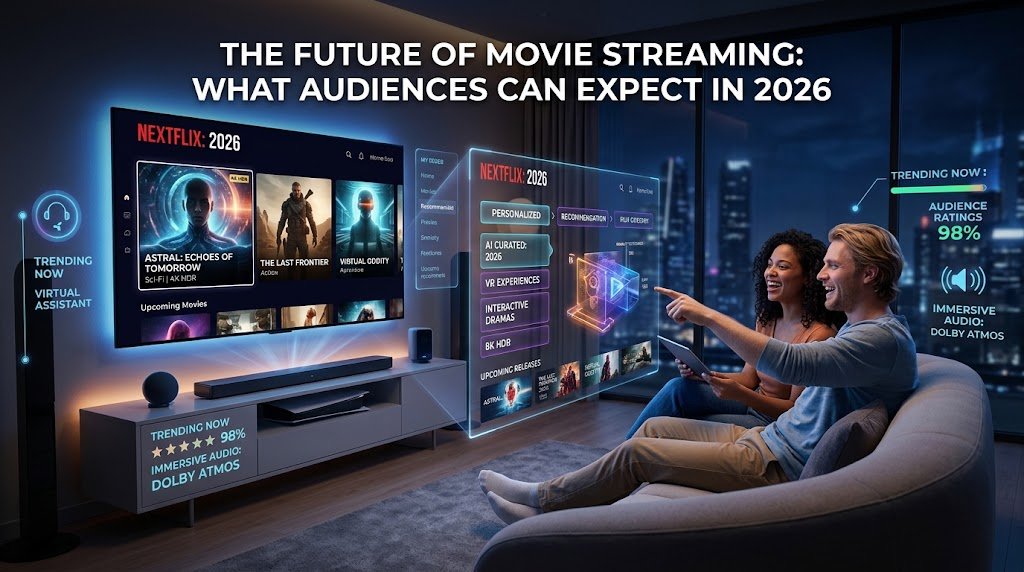
Movie streaming has changed the way audiences discover, watch, and enjoy films. Instead of waiting for a movie to arrive on television or visiting a cinema, viewers can now access thousands of titles from their smartphones, smart TVs, tablets, and computers.
In 2026, the streaming industry continues to evolve. New technologies, changing viewer expectations, artificial intelligence, and the growing popularity of independent films are influencing how audiences experience movies online.
So, what does the future of movie streaming look like? Here are some of the biggest trends audiences can expect in 2026.
Table of Contents
1. More Personalized Movie Recommendations
Streaming platforms are becoming better at understanding what individual viewers enjoy.
Instead of simply showing popular movies, platforms can recommend films based on:
- Previous viewing history
- Favorite genres
- Watch time
- Ratings and interactions
- Similar audience preferences
Artificial intelligence can make these recommendations more personalized, helping viewers discover movies that match their interests.
This could also make it easier for audiences to discover independent and lesser-known films that they might otherwise overlook.
2. AI Will Play a Bigger Role in Streaming
Artificial intelligence is becoming an important part of the entertainment industry.
In movie streaming, AI can help with:
- Personalized recommendations
- Search
- Content discovery
- Automated subtitles
- Voice-based searches
- Audience analytics
- Content categorization
For viewers, this means finding the right movie could become faster and more convenient.
Instead of scrolling through hundreds of titles, users may be able to describe what they want and receive more relevant recommendations.
3. Independent Movies Will Reach More Audiences
One of the most exciting developments in streaming is the opportunity it provides to independent filmmakers.
Traditional movie distribution can be difficult for smaller productions. Independent films may have limited access to major theaters or large promotional budgets.
Streaming platforms provide another way for these movies to reach viewers.
Audiences in 2026 can expect to see more independent films becoming available online, giving viewers greater variety beyond major studio productions.
4. More Flexible Viewing Options
Modern audiences want flexibility.
People watch movies:
- At home
- On smartphones
- On tablets
- On laptops
- On smart TVs
- While traveling
Streaming services are increasingly designed around this flexibility.
Viewers can start watching on one device and continue on another, making movie streaming more convenient than traditional viewing methods.
5. Better Video and Audio Quality
Technology continues to improve the quality of online entertainment.
Depending on the platform, device, and internet connection, audiences can experience high-resolution video and improved sound quality.
Better compression technology and faster internet connections are also helping streaming services deliver higher-quality content more efficiently.
For movie lovers, this means the difference between traditional home entertainment and professional viewing experiences continues to shrink.
6. Social Features Could Become More Important
Watching movies has traditionally been a social experience, whether in a cinema or at home with family and friends.
Streaming platforms can bring some of that social experience online.
Future streaming experiences may include features such as:
- Watch parties
- Shared recommendations
- Social reviews
- Community discussions
- Shared playlists
- Interactive viewing experiences
These features can help audiences connect with other movie fans instead of watching content in isolation.
7. More Focus on Legal and Safe Streaming
As streaming continues to grow, audiences are becoming more aware of the importance of watching movies through legitimate platforms.
Legal streaming services provide a safer way to access entertainment while supporting filmmakers, actors, production companies, and other professionals involved in creating movies.
For viewers, choosing legitimate streaming sources can also reduce the risks associated with unauthorized websites, intrusive advertisements, and potentially harmful downloads.
8. Streaming and Cinema Will Continue to Coexist
Streaming isn’t necessarily replacing movie theaters.
Cinema still offers something that home streaming cannot completely replicate: a large screen, powerful sound system, and shared audience experience.
Instead, audiences are likely to continue using both options.
A viewer might watch a major blockbuster in theaters while choosing streaming for independent films, documentaries, older movies, or movies they missed during their theatrical release.
This creates more choices rather than eliminating traditional movie experiences.
9. Shorter Attention Spans Will Influence Content Discovery
Audiences have more entertainment options than ever.
Because viewers can quickly move between movies, shows, social media, and other content, streaming platforms need to make discovery simple and engaging.
Movie trailers, previews, personalized categories, short clips, and better search tools can help viewers decide what to watch.
For independent filmmakers, creating an effective trailer and strong online presence will become increasingly important.
10. Independent Filmmakers Will Have More Opportunities
Streaming isn’t only changing how audiences watch movies. It is also changing how filmmakers distribute them.
Independent filmmakers can use digital platforms to:
- Reach international audiences
- Promote their films online
- Build communities
- Experiment with different genres
- Connect directly with viewers
- Find new distribution opportunities
This can help reduce some of the traditional barriers faced by smaller productions.
What Does the Future of Movie Streaming Look Like?
The future of movie streaming in 2026 is likely to focus on convenience, personalization, accessibility, and greater content variety.
AI will make discovery more intelligent, while better technology will improve the viewing experience. At the same time, independent filmmakers will have more opportunities to introduce their work to audiences around the world.
For viewers, this means having more movies and more ways to watch them.
For filmmakers and production companies, it means having new opportunities to reach audiences without relying entirely on traditional distribution methods.
Final Thoughts
Movie streaming has already transformed the entertainment industry, but the evolution is far from over.
As technology develops, audiences can expect smarter recommendations, better viewing experiences, more independent films, flexible access, and new ways to interact with movies.
The biggest change may be that viewers will have more control than ever over what they watch, when they watch it, and how they discover new films.
For independent production companies like LuxProductions, this changing streaming environment creates exciting opportunities to connect original films with audiences looking for something beyond mainstream entertainment.