
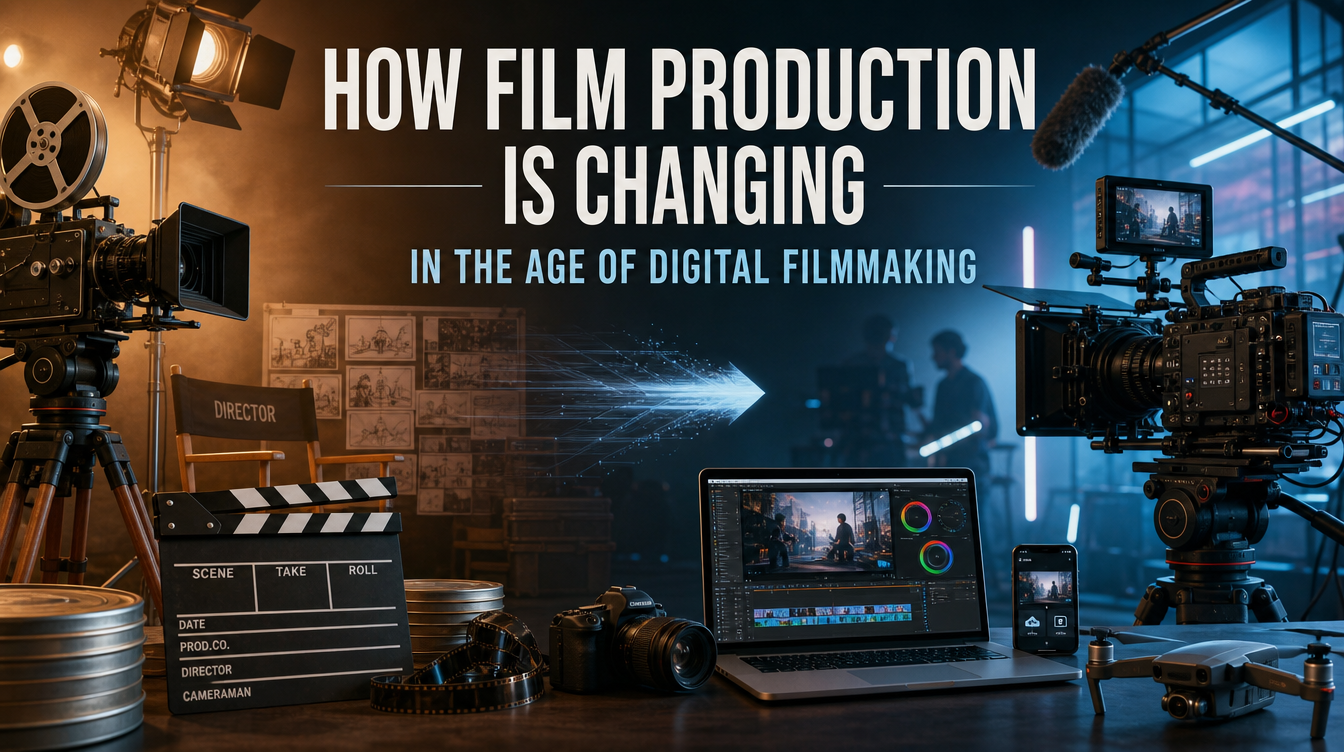
The film industry has experienced a major transformation over the past few decades. One of the biggest changes has been the shift from traditional film cameras and physical workflows to digital filmmaking. Today, filmmakers can use advanced digital cameras, visual effects, virtual production environments, artificial intelligence tools, and sophisticated editing software to create stories faster and with greater creative flexibility.
Digital filmmaking has changed almost every stage of production, from planning and shooting to editing, visual effects, color grading, and final delivery. These technologies are also making professional filmmaking more accessible to independent filmmakers and smaller production teams.
For production companies such as LuxProductions, understanding these changes is essential for creating high-quality content in an increasingly competitive industry.
What Is Digital Filmmaking?
Digital filmmaking is the process of creating movies, television content, commercials, and other video productions using digital cameras, software, and computer-based production workflows instead of traditional photographic film.
Modern digital cameras can capture extremely detailed footage while giving filmmakers greater control over resolution, frame rates, dynamic range, and color. Once footage is captured, it can move directly into digital editing and post-production workflows.
This connected workflow has made filmmaking more efficient and has opened up creative possibilities that were difficult or expensive to achieve with traditional methods.
How Digital Filmmaking Is Changing Film Production
1. Digital Cameras Have Transformed Cinematography
One of the most noticeable changes brought by digital filmmaking is the development of advanced digital cinema cameras.
Modern cameras can capture high-resolution footage with impressive dynamic range and low-light performance. Filmmakers can also change camera settings quickly during production and review footage almost immediately.
Digital cameras provide several advantages, including:
- High-resolution image capture
- Immediate footage review
- Flexible frame rates
- Advanced color profiles
- Better low-light performance
- Reduced dependence on physical film stock
- Easier integration with visual effects workflows
These capabilities allow cinematographers and directors to experiment more freely while filming.
2. Production Workflows Are Becoming Faster
Traditional filmmaking often required physical film processing before filmmakers could properly evaluate their footage. Digital workflows have largely eliminated this delay.
With digital filmmaking, production teams can transfer footage to editing and storage systems quickly. Directors and cinematographers can review takes during production and identify potential problems before leaving a location.
This can help reduce reshoots and improve communication between different departments.
Digital workflows also make it easier for production teams to organize large amounts of footage and share files between editors, visual effects artists, colorists, and other specialists.
3. Visual Effects Are More Integrated Into Production
Visual effects have become an important part of modern filmmaking. Digital production tools allow filmmakers to combine live-action footage with computer-generated environments, characters, objects, and effects.
Modern VFX workflows can include:
- CGI environments
- 3D characters
- Digital set extensions
- Green-screen compositing
- Motion capture
- 3D animation
- Simulation effects
- Digital matte painting
The result is greater creative freedom. Filmmakers can create locations and situations that would otherwise be extremely expensive or impossible to capture physically.
4. Virtual Production Is Changing the Way Scenes Are Filmed
Virtual production is another major development connected to digital filmmaking.
Instead of filming exclusively against traditional green screens, productions can use large LED walls to display digital environments behind actors. These environments can be created and manipulated using real-time 3D technologies.
Virtual production can help filmmakers:
- Visualize environments during filming
- Control lighting more accurately
- Reduce location requirements
- Preview visual effects on set
- Create environments that would be difficult to film physically
- Give actors and directors a more immersive setting
As the technology continues to develop, virtual production is becoming an increasingly important option for film, television, commercials, and other forms of visual storytelling.
5. Editing Has Become More Flexible
Digital filmmaking has completely changed the editing process.
Instead of physically cutting and arranging film, editors can work with digital files inside non-linear editing systems. This allows editors to experiment with different versions of a scene without permanently changing the original footage.
Editors can easily:
- Rearrange scenes
- Test different cuts
- Adjust pacing
- Add transitions
- Synchronize sound
- Apply visual effects
- Create multiple versions
- Collaborate remotely
This flexibility allows directors and editors to explore more creative possibilities during post-production.
6. Color Grading Has Become More Advanced
Color plays an important role in the visual identity of a film. Digital workflows have made professional color grading more precise and flexible.
Colorists can adjust exposure, contrast, saturation, highlights, shadows, skin tones, and other visual elements to create a specific cinematic style.
Digital color grading can also help maintain visual consistency between scenes filmed in different locations or under different lighting conditions.
For filmmakers, this means the final appearance of a project can be carefully refined even after principal photography has finished.
7. AI Is Becoming Part of the Filmmaking Workflow
Artificial intelligence is another technology influencing modern digital filmmaking.
AI-powered tools are increasingly being explored for tasks such as script development, pre-production planning, visual effects, editing assistance, transcription, asset organization, and image generation.
AI can potentially help production teams automate repetitive tasks and spend more time on creative decisions.
However, AI does not eliminate the need for experienced filmmakers. Storytelling, directing, cinematography, acting, production design, and creative judgment still require human expertise.
The most effective approach is likely to involve filmmakers using AI as a production tool rather than treating it as a replacement for creative professionals.
8. Remote Collaboration Is Easier
Digital production has also changed how filmmaking teams collaborate.
Editors, VFX artists, sound designers, colorists, and producers can work on different parts of a project from different locations. Digital file-sharing platforms and cloud-based workflows allow teams to exchange assets and review progress without always being physically present in the same studio.
This has made international and distributed production workflows more practical.
For production companies working with specialized talent around the world, digital collaboration can provide access to a much wider pool of creative professionals.
9. Independent Filmmakers Have More Opportunities
Another important advantage of digital filmmaking is accessibility.
Professional filmmaking equipment was once extremely expensive and difficult for independent creators to access. Today, filmmakers can choose from a wide range of digital cameras, editing systems, lighting equipment, audio tools, and production software.
This does not mean that professional filmmaking has become easy. Strong storytelling, planning, cinematography, sound, editing, and production management remain essential.
However, digital technology has lowered some of the technical barriers that previously prevented smaller teams from producing high-quality content.
10. Digital Distribution Has Changed the Final Stage of Production
The transformation does not stop after post-production.
Streaming platforms, video-sharing websites, social media, and digital distribution services have created more ways for audiences to discover and watch content.
Filmmakers can now produce content for:
- Feature films
- Streaming platforms
- Television
- Online video
- Social media
- Commercial campaigns
- Corporate productions
- Short films
This means production teams increasingly need to consider the intended distribution platform while planning a project.
Different platforms may require different resolutions, aspect ratios, runtimes, subtitles, audio formats, and delivery specifications.
Traditional Filmmaking vs Digital Filmmaking
The differences between traditional and digital workflows are significant.
| Traditional Filmmaking | Digital Filmmaking |
| Physical film stock | Digital media |
| Film processing required | Immediate digital footage |
| More limited footage management | Large-scale digital storage |
| Physical editing processes | Non-linear digital editing |
| Traditional optical effects | Advanced digital VFX |
| Physical distribution | Digital and streaming distribution |
| More limited workflow flexibility | Highly flexible production workflow |
While traditional film still has artistic value and continues to be used by some filmmakers, digital workflows have become dominant across much of the modern production industry.
The Future of Digital Filmmaking
The future of digital filmmaking will likely involve even greater integration between cameras, artificial intelligence, visual effects, virtual production, cloud collaboration, and real-time rendering.
Technology will continue to evolve, but the fundamental purpose of filmmaking will remain the same: telling compelling stories.
The most successful production companies will be those that combine technological innovation with strong creative direction. New tools can improve efficiency and expand creative possibilities, but storytelling remains at the heart of every successful production.
Conclusion
Digital filmmaking has transformed the modern film production process. From advanced digital cameras and non-linear editing to VFX, virtual production, AI, and online distribution, technology has changed how filmmakers plan, create, edit, and deliver visual content.
These developments have made production workflows more flexible and opened new creative opportunities for both major studios and independent filmmakers.
As technology continues to advance, the future of film production will likely become even more connected, collaborative, and digitally driven. For filmmakers and production companies, keeping up with these developments can be an important part of remaining competitive in the modern entertainment industry.
Frequently Asked Questions
What is digital filmmaking?
Digital filmmaking is the process of creating films and other video content using digital cameras, software, visual effects, and computer-based production workflows rather than traditional photographic film.
How has digital filmmaking changed film production?
Digital filmmaking has made production more flexible by improving camera technology, editing workflows, visual effects, color grading, storage, collaboration, and digital distribution.
Is digital filmmaking better than traditional filmmaking?
Digital filmmaking offers greater flexibility and efficiency, but traditional film still has unique visual characteristics. The best choice depends on the creative goals and requirements of a production.
How does AI affect digital filmmaking?
AI can assist with tasks such as pre-production, editing, visual effects, transcription, asset management, and other repetitive workflows. Human creative direction remains essential.
What is the future of digital filmmaking?
The future is likely to involve greater use of virtual production, AI-assisted workflows, real-time rendering, advanced VFX, cloud collaboration, and increasingly sophisticated digital cameras.
Why is digital filmmaking important for production companies?
Digital filmmaking allows production companies to work more efficiently, collaborate across locations, create sophisticated visual effects, and deliver content for a wide range of modern platforms.