
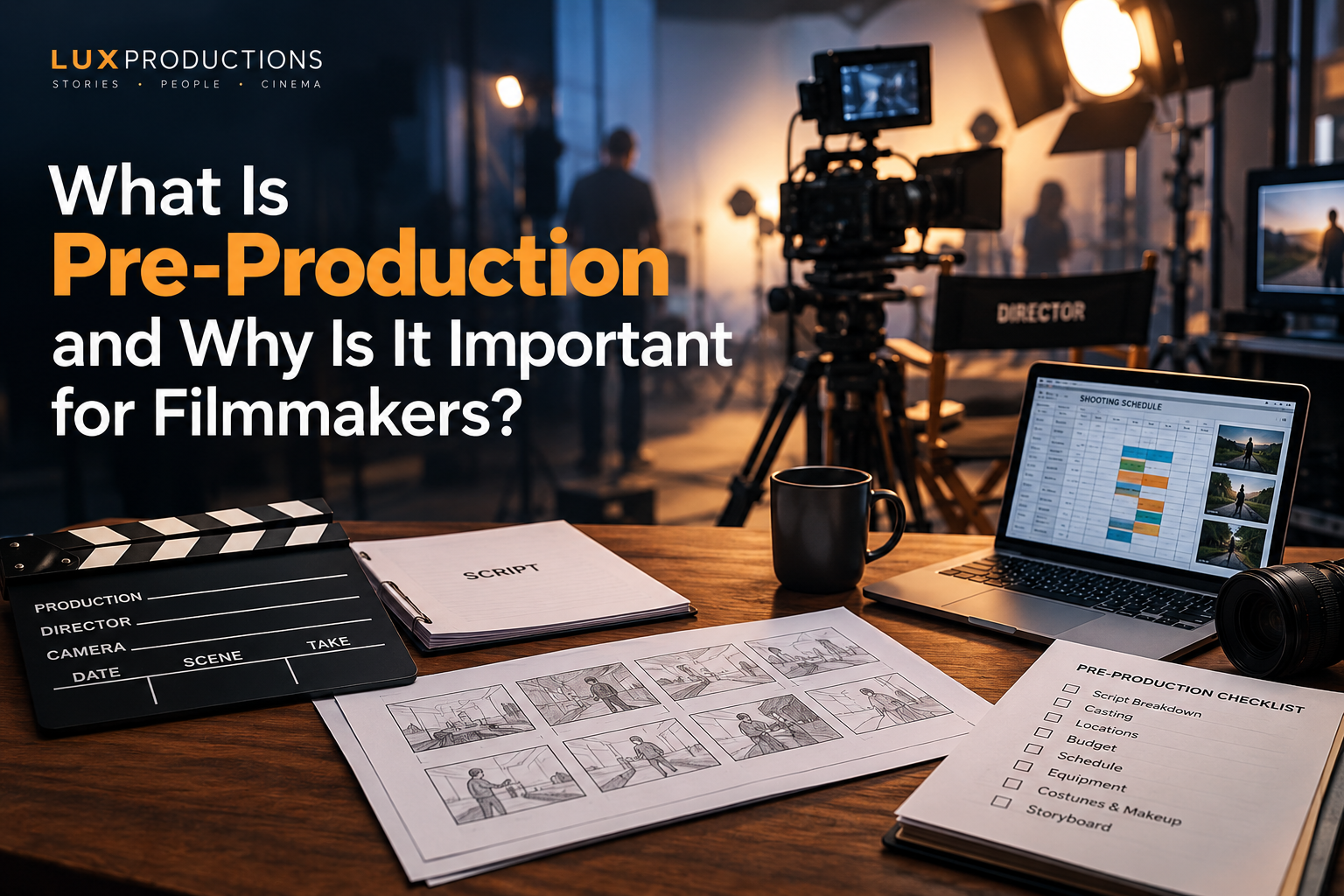
Making a movie involves much more than cameras, actors, and a good story. Before filming begins, filmmakers spend significant time planning every important detail of the production. This stage is known as film pre-production.
This planning phase helps filmmakers turn a screenplay or creative idea into an organized production. During this stage, directors, producers, actors, and crew members prepare everything needed before cameras start rolling.
A successful pre-filming process can save time, control costs, prevent production problems, and give everyone a clear understanding of their responsibilities.
But what exactly does this early stage entail, and why is it so critical for filmmakers?
What Is Film Pre-Production?
Film pre-production is the stage of filmmaking that takes place before the actual filming or production begins.
Film pre-production is the stage of filmmaking that takes place before the actual filming or principal photography begins.
During this early phase, creators transform a screenplay into a practical production plan. This includes making decisions about casting, locations, scheduling, budgeting, equipment, costumes, sets, lighting, and other key logistics.
The duration of this preparation stage depends on the size and complexity of the project. A short independent project may require only a few weeks of preparation, while a studio feature can spend months in setup.
Regardless of the project’s size, the main goal remains identical: prepare as thoroughly as possible before the cameras roll.
Why Is Film Pre-Production Important?
Proper preparation is essential because it allows directors and producers to identify potential bottlenecks before they become expensive or difficult to solve on set.
Without adequate planning, a movie set can face scheduling conflicts, budget overruns, gear failure, location access issues, and breakdown in communication.
A well-structured roadmap gives the entire crew clear guidance throughout the upcoming shoot.
Here are some of the most important benefits of film pre-production.
1. Film Pre-Production Creates a Clear Production Plan
A movie can involve dozens or even hundreds of people working toward the same creative goal. Every department needs to understand what is expected from them.
During film pre-production, the production team creates plans for:
- Shooting schedules
- Scene breakdowns
- Locations
- Cast requirements
- Crew responsibilities
- Equipment
- Production deadlines
- Budget requirements
- Transportation
- Props and costumes
This preparation ensures that everyone has a clear direction when production begins.
2. Film Pre-Production Helps Control the Budget
Movie production can become expensive very quickly. Equipment rentals, locations, transportation, costumes, sets, crew members, and post-production all contribute to the total cost.
One of the major advantages of film pre-production planning is that producers can estimate these expenses before filming begins.
A detailed budget allows producers to decide where money should be spent and where costs can be reduced.
For independent filmmakers, effective film pre-production can be especially important because independent productions often operate with limited financial resources.
3. Film Pre-Production Helps With Casting
Casting is another major part of the film pre-production process.
Directors and casting teams search for actors who can bring the characters from the screenplay to life. Depending on the project, the casting process may include auditions, callbacks, chemistry tests, screen tests, and interviews.
Choosing the right actors can have a significant effect on the final movie.
Strong casting allows performers to create believable characters and helps audiences connect with the story.
4. Location Scouting Is Part of Film Pre-Production
Locations can strongly influence a movie’s visual style, atmosphere, and storytelling.
During film pre-production, location scouts search for places that match the requirements of the screenplay and the director’s vision.
They may consider:
- Appearance
- Accessibility
- Lighting
- Noise levels
- Space
- Parking
- Safety
- Permits
- Production costs
Finding suitable locations before filming allows the production team to prepare for potential challenges and organize the shooting schedule more efficiently.
5. Film Pre-Production Helps Directors Plan Scenes
Directors use film pre-production to determine how individual scenes should be filmed.
They may plan:
- Camera angles
- Camera movements
- Shot sizes
- Lighting
- Actor positioning
- Blocking
- Visual composition
- Transitions
Storyboards and shot lists are commonly used during pre-production to visualize scenes before filming.
This preparation gives the director and cinematographer a clearer understanding of how each scene should look.
What Are the Main Stages of Film Pre-Production?
The film pre-production process includes many different tasks. While every movie has unique requirements, several important stages are common to most productions.
Script Breakdown
A script breakdown is one of the first steps in film pre-production.
The screenplay is carefully analyzed to identify everything required for each scene.
A script breakdown can identify:
- Characters
- Locations
- Props
- Costumes
- Vehicles
- Special effects
- Makeup requirements
- Stunts
- Background actors
- Special equipment
This information helps producers determine the resources required for the movie.
Budget Planning
After the script has been broken down, producers can develop a more detailed production budget.
The budget may include:
- Cast
- Crew
- Equipment
- Locations
- Transportation
- Accommodation
- Props
- Costumes
- Sets
- Post-production
- Marketing
- Distribution
Proper budgeting during film pre-production helps prevent unexpected financial problems later.
Casting and Auditions
Casting directors and filmmakers search for performers who fit the characters described in the screenplay.
Auditions and screen tests can help the creative team evaluate an actor’s performance, personality, appearance, and chemistry with other cast members.
Casting decisions made during film pre-production can have a major influence on the quality of the final production.
Location Scouting
Location scouting is another essential part of pre-production.
The production team looks for locations that fit the story while also meeting practical requirements.
Once a location has been selected, filmmakers may need permission or permits before filming.
Creating the Shooting Schedule
A detailed shooting schedule is essential for an efficient production.
Movies are rarely filmed in the exact order in which scenes appear in the screenplay. Instead, production teams often group scenes based on locations, actors, equipment, and other logistical requirements.
For example, several scenes using the same location may be filmed together to reduce transportation and location costs.
This type of planning is a key part of effective film pre-production.
Storyboarding and Shot Lists
Storyboards provide visual representations of planned shots.
They help directors and cinematographers understand how scenes will be framed and captured.
A shot list can also identify the specific camera shots required for each scene.
Together, storyboards and shot lists make the filming process more organized and efficient.
Costume and Makeup Planning
Costume designers and makeup artists work with the director and production designer to establish the appearance of the characters.
Costumes can communicate information about a character’s personality, profession, background, or development throughout the story.
Makeup, hairstyling, and wardrobe planning are therefore important elements of film pre-production.
Equipment Preparation
The production team also determines which equipment will be required.
This may include:
- Cameras
- Lenses
- Tripods
- Lighting equipment
- Microphones
- Audio recorders
- Gimbals
- Drones
- Monitors
- Grip equipment
Testing and preparing equipment before filming can reduce technical problems on set.
The Role of the Director in Film Pre-Production
The director plays a central role in film pre-production.
While producers often focus on budgets, schedules, resources, and logistics, directors concentrate heavily on the creative vision of the movie.
During pre-production, directors may work closely with:
- Cinematographers
- Producers
- Production designers
- Costume designers
- Makeup artists
- Sound teams
- Casting directors
- Editors
This collaboration allows different departments to understand the director’s vision before filming begins.
Good communication during film pre-production can make the actual production process much smoother.
The Role of the Producer in Pre-Production
Producers are also essential to the film pre-production process.
They help organize the practical and financial aspects of the project and make sure the production has the resources needed to move forward.
Depending on the movie, producers may handle or supervise:
- Budgeting
- Hiring
- Scheduling
- Contracts
- Locations
- Equipment
- Transportation
- Production logistics
The producer often connects the creative goals of the project with its practical requirements.
Why Film Pre-Production Matters for Independent Filmmakers
Film pre-production can be particularly valuable for independent filmmakers.
Independent movies often have smaller budgets and smaller crews. Because resources may be limited, production mistakes can have a significant impact.
Detailed pre-production planning helps filmmakers make better use of the resources they already have.
For example, a carefully planned shooting schedule can reduce location expenses, while a detailed shot list can help a small crew capture all the footage needed.
Good film pre-production does not guarantee that every production will be perfect, but it can significantly reduce avoidable problems.
Common Film Pre-Production Mistakes
Even experienced filmmakers can make mistakes during pre-production.
Underestimating the Budget
Unexpected expenses can create serious financial problems. Producers should include contingency funds whenever possible.
Creating an Unrealistic Schedule
A production schedule that is too ambitious can cause delays, overtime costs, and unnecessary pressure on cast and crew.
Failing to Scout Locations Properly
A location may look ideal but create problems because of noise, weather, lighting, accessibility, or limited space.
Ignoring Technical Requirements
Camera, lighting, and audio requirements should be tested before filming whenever possible.
Poor Communication
Filmmaking requires multiple departments to work together. Poor communication can result in misunderstandings, delays, and additional expenses.
Regular production meetings and clear documentation can help prevent these issues.
How Film Pre-Production Improves the Final Movie
Effective film pre-production does more than organize the production team. It can also improve the quality of the final movie.
When filmmakers have a clear plan, they can spend more time focusing on performances, storytelling, cinematography, sound, and other creative elements during filming.
Instead of constantly solving avoidable logistical problems, the crew can concentrate on capturing the best possible footage.
This is why professional filmmakers often view pre-production as an important creative stage rather than simply an administrative process.
Film Pre-Production Checklist
Before cameras start rolling, filmmakers should consider completing the following checklist:
- Finalize the screenplay
- Complete the script breakdown
- Establish the production budget
- Hire key crew members
- Complete casting
- Scout filming locations
- Obtain necessary permits
- Create the shooting schedule
- Prepare storyboards
- Create shot lists
- Organize costumes and makeup
- Arrange props and set design
- Prepare camera and lighting equipment
- Plan sound recording
- Schedule rehearsals
- Confirm transportation and logistics
This checklist can help filmmakers make sure important details are not overlooked.
Frequently Asked Questions About Film Pre-Production
How long does film pre-production take?
The length of film pre-production depends on the size and complexity of the project. A short film may require only a few weeks, while a large feature film can require several months of preparation.
What happens during film pre-production?
Film pre-production can include script breakdowns, casting, budgeting, location scouting, scheduling, storyboarding, costume planning, equipment preparation, rehearsals, and production meetings.
Is film pre-production necessary for a short film?
Yes. Even a small short film can benefit from proper pre-production. A simple budget, shooting schedule, shot list, and location plan can make filming much more efficient.
Who is involved in film pre-production?
Depending on the project, directors, producers, casting directors, cinematographers, production designers, costume designers, location scouts, and other crew members may participate in pre-production.
What is the difference between pre-production and production?
Pre-production is the planning stage of filmmaking. Production is when the actual filming takes place. After production comes post-production, where footage is edited and elements such as sound, music, and visual effects are completed.
Final Thoughts
Film pre-production is the foundation of an organized and successful movie production. From casting and location scouting to budgeting, scheduling, storyboarding, and equipment preparation, many important filmmaking decisions are made before the cameras start rolling.
Taking the time to properly plan a movie can save money, reduce delays, improve communication, and create a smoother experience for everyone involved.
Whether it is a major feature film or a small independent production, effective film pre-production helps turn a creative idea into a practical production plan.
For audiences, understanding the film pre-production process also provides a greater appreciation for the work that happens behind the scenes before a movie ever reaches the screen.