
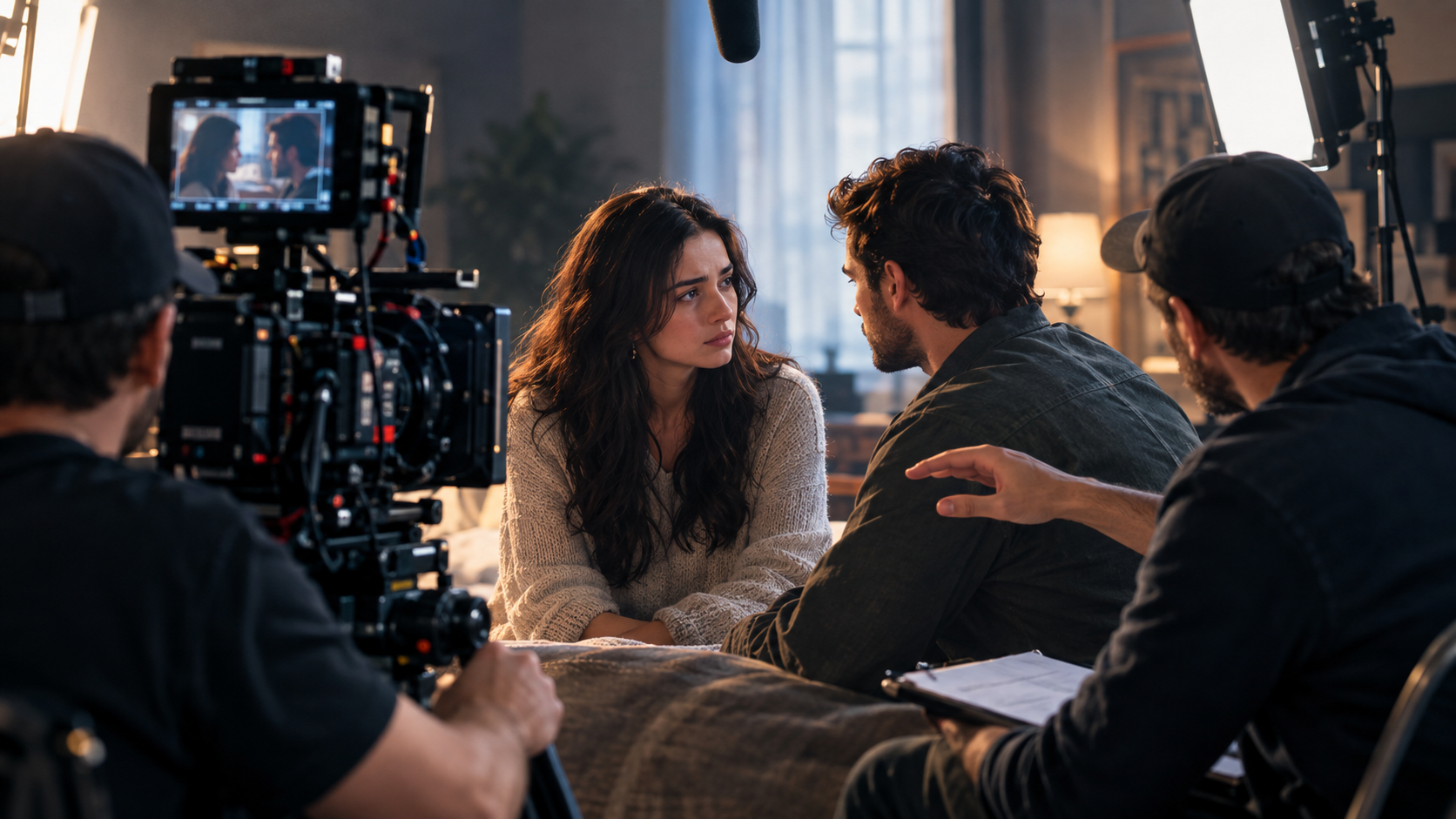
A powerful movie performance can make audiences laugh, cry, or connect deeply with a character. While talented actors bring emotion and personality to a role, filmmakers play an equally important part in helping those performances feel genuine. Through careful direction, thoughtful preparation, camera work, and a supportive filming environment, production teams can capture moments that feel natural rather than forced.
Capturing authentic performances on camera is not simply about asking actors to show strong emotions. It involves creating the right conditions for performers to understand their characters, respond naturally, and remain connected to the story.
What Makes a Performance Feel Authentic?
An authentic performance feels believable because the audience can recognize genuine human emotions within it. Instead of appearing as though an actor is simply reciting lines, the character seems to think, react, and experience the moment naturally.
Several elements contribute to this realism:
- Emotional understanding: The actor understands what the character wants and feels.
- Natural reactions: Responses develop from the situation rather than appearing exaggerated.
- Strong character preparation: The performer knows the character’s background, motivations, and personality.
- Connection with scene partners: Genuine interaction makes conversations feel more believable.
- Appropriate direction: The filmmaker guides the performance without removing the actor’s individuality.
When these elements work together, the result can create a stronger emotional connection between the audience and the story.
1. Building Character Understanding for Authentic Performances on Camera
One of the first steps in capturing authentic performances on camera is helping actors understand their characters. A performer needs more than memorized dialogue. They must understand the character’s motivations, fears, relationships, and objectives.
Directors and actors may discuss questions such as:
- What does the character want in this scene?
- What is the character afraid of losing?
- What happened immediately before the scene?
- How does the character feel about the other people present?
- What emotions might the character be hiding?
This preparation allows actors to make more believable choices. When performers understand the reasons behind a character’s actions, their expressions and reactions become more natural.
2. Creating a Comfortable Filming Environment
Actors often perform more authentically when they feel comfortable taking creative risks. A tense or overly critical environment can make performers focus more on avoiding mistakes than on connecting with the scene.
A professional film set should encourage:
- Clear communication between the director and cast
- Respectful feedback
- Adequate rehearsal time
- A safe environment for emotional scenes
- Trust between performers and the production team
This does not mean a film set should lack discipline. Instead, a well-organized production gives actors the confidence to concentrate on their performances.
3. Using Direction to Encourage Natural Choices
Directors have a major influence on how performances develop. However, capturing authentic performances on camera often requires more than giving actors exact instructions for every movement or expression.
Instead of saying, “Look sad here,” a director might explain what the character has just experienced or what the character is trying to achieve. This gives the actor a clear emotional situation while allowing room for an individual interpretation.
For example, a director might ask an actor to:
- Hide disappointment instead of openly showing it
- Try to convince another character of something
- Avoid revealing what they are thinking
- Respond as though they have just received unexpected news
These approaches can create more subtle and believable performances.
4. Allowing Actors to React Naturally
Some of the most memorable moments in movies come from small, unexpected reactions. A pause, glance, change in breathing, or slight movement can communicate more than a dramatic speech.
Filmmakers can support natural reactions by allowing actors enough space to listen and respond. When every moment is overly controlled, performances may feel mechanical.
Directors may also encourage actors to remain present in the scene rather than planning every reaction in advance. This helps conversations feel more like real interactions.
5. Using Camera Work to Support the Performance
Camera work is essential when filmmakers want to capture authentic performances on camera. The choice of shot, camera movement, framing, and lens can influence how audiences experience an actor’s emotions.
Close-Ups
Close-ups allow viewers to observe subtle facial expressions and emotional changes. They are especially effective during quiet or emotionally intense moments.
Medium Shots
Medium shots show both the actor’s expressions and body language. They can help audiences understand how a character interacts with others.
Wide Shots
Wide shots place the performance within its environment. They can reveal relationships, distance, tension, or isolation without relying only on facial expressions.
Controlled Camera Movement
A carefully planned camera movement can follow a character’s emotional journey. In some scenes, a steady camera supports realism, while a more dynamic approach may reflect confusion, excitement, or tension.
The goal is not to make every shot visually dramatic. It is to choose camera techniques that support the emotional truth of the scene.
6. Making Dialogue Feel Natural
Dialogue can sound unnatural when actors focus only on delivering lines correctly. Authentic performances often depend on how characters listen, interrupt, pause, and respond.
Filmmakers can improve natural dialogue by encouraging actors to:
- Listen carefully to their scene partners
- Avoid rushing through emotional moments
- Use pauses when appropriate
- Respond to meaning rather than only to words
- Maintain realistic conversational rhythms
Sometimes, a brief pause or unfinished sentence can communicate more than a perfectly delivered line.
7. Using Rehearsals Without Making Performances Mechanical
Rehearsals help actors understand blocking, timing, relationships, and scene objectives. They also allow directors and cinematographers to plan camera placement and lighting.
However, rehearsals should not make every performance feel identical. Actors may need room to explore different approaches before filming.
A productive rehearsal process can include:
- Reading the scene together
- Discussing character motivations
- Exploring movement and blocking
- Testing different emotional approaches
- Adjusting the scene based on what feels believable
This preparation gives the production structure while preserving room for spontaneity.
8. Choosing the Right Take
Filmmakers rarely capture the perfect performance in the first take. Different takes may reveal different emotional qualities, reactions, or moments of spontaneity.
One take may be technically precise, while another may contain a more powerful emotional response. Directors and editors must consider which version best serves the story.
The strongest take is not always the loudest or most dramatic. Sometimes, a quieter performance communicates the character’s feelings more effectively.
9. Supporting Performances Through Lighting and Sound
Lighting and sound also contribute to authentic performances on camera. A well-designed lighting setup can create a natural environment that helps actors feel connected to the scene.
Sound is equally important. Clear dialogue, realistic room tone, and carefully recorded reactions help preserve the emotional details of a performance.
When technical departments work closely with actors and directors, they can capture performances without distracting from the story.
10. Using Editing to Preserve Emotional Truth
Editing determines how individual performances are assembled into the final scene. The editor chooses when to cut, how long to hold a reaction, and which moments deserve emphasis.
A meaningful pause may be preserved because it reveals a character’s uncertainty. A reaction shot may be included because it communicates an emotion that dialogue does not express.
Good editing supports the performance rather than overwhelming it. It allows the audience to experience the scene at the right emotional pace.
Why Authentic Performances Matter in Filmmaking
Authentic performances help audiences connect with characters and become more invested in the story. When emotions feel believable, viewers are more likely to understand a character’s decisions, relationships, and struggles.
For filmmakers, realistic performances can also strengthen:
- Character development
- Emotional storytelling
- Audience engagement
- Scene credibility
- Overall production quality
Whether a movie is a quiet drama, an independent production, or a large-scale feature, believable acting remains one of its most important creative elements.
Frequently Asked Questions
1. How do filmmakers capture authentic performances on camera?
Filmmakers capture authentic performances on camera by helping actors understand their characters, creating a comfortable filming environment, encouraging natural reactions, and using camera work that supports the emotions of the scene.
2. What makes an acting performance feel authentic?
An acting performance feels authentic when the character’s emotions, reactions, dialogue, and body language appear believable. Strong character preparation and natural interaction with other performers help create this realism.
3. How does a director help actors give realistic performances?
A director helps actors give realistic performances by explaining character motivations, providing clear emotional direction, and allowing performers to explore natural choices rather than controlling every expression or movement.
4. Why is a comfortable filming environment important for actors?
A comfortable filming environment helps actors feel confident, take creative risks, and focus on their characters. Trust and respectful communication can make emotional performances feel more natural.
5. How does camera work affect an actor’s performance?
Camera work influences how audiences experience an actor’s emotions. Close-ups reveal subtle expressions, medium shots show body language, and wide shots place the performance within its surroundings.
Final Thoughts
Capturing authentic performances on camera requires collaboration between actors, directors, cinematographers, sound teams, editors, and other production professionals. It involves understanding characters, creating a supportive environment, encouraging natural reactions, and using filmmaking techniques that serve the story.
The most effective performances are not always the most exaggerated. Often, they are the moments that feel honest, subtle, and emotionally recognizable. By combining thoughtful direction with strong technical execution, filmmakers can create performances that stay with audiences long after the movie ends.